Educational Insights: How Wooden Pretend Toys Enhance Children's Social Skills
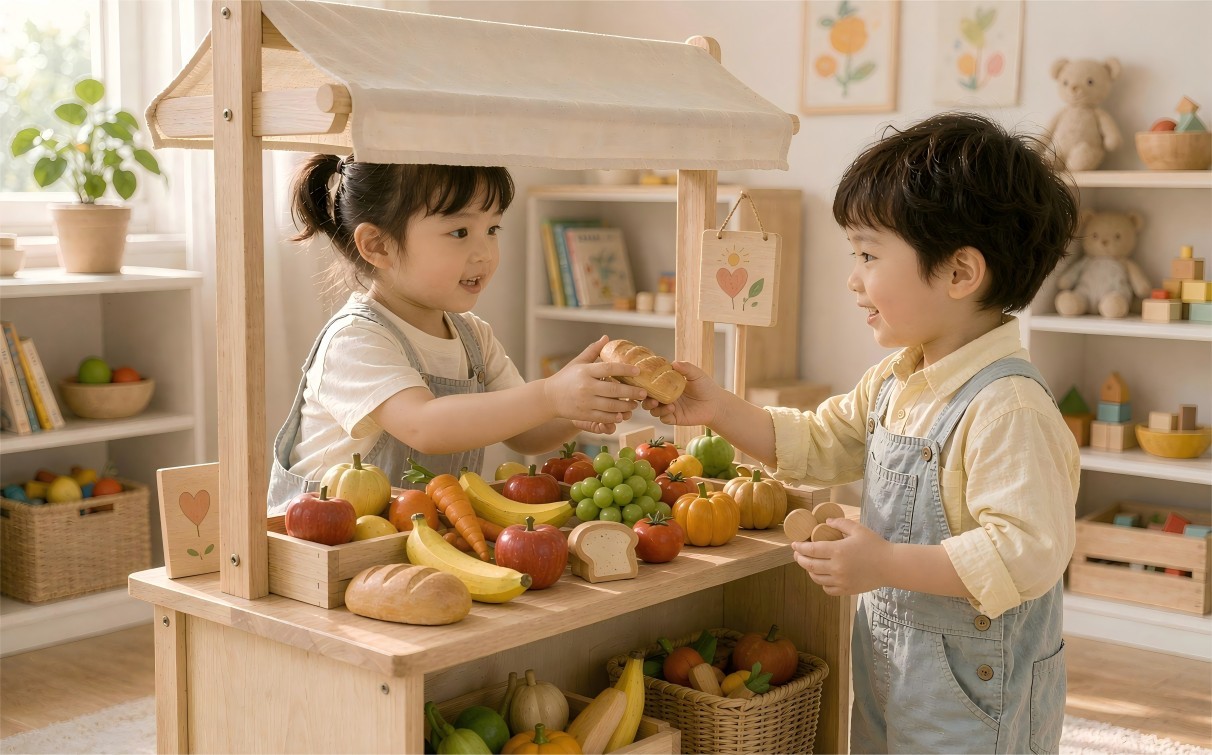
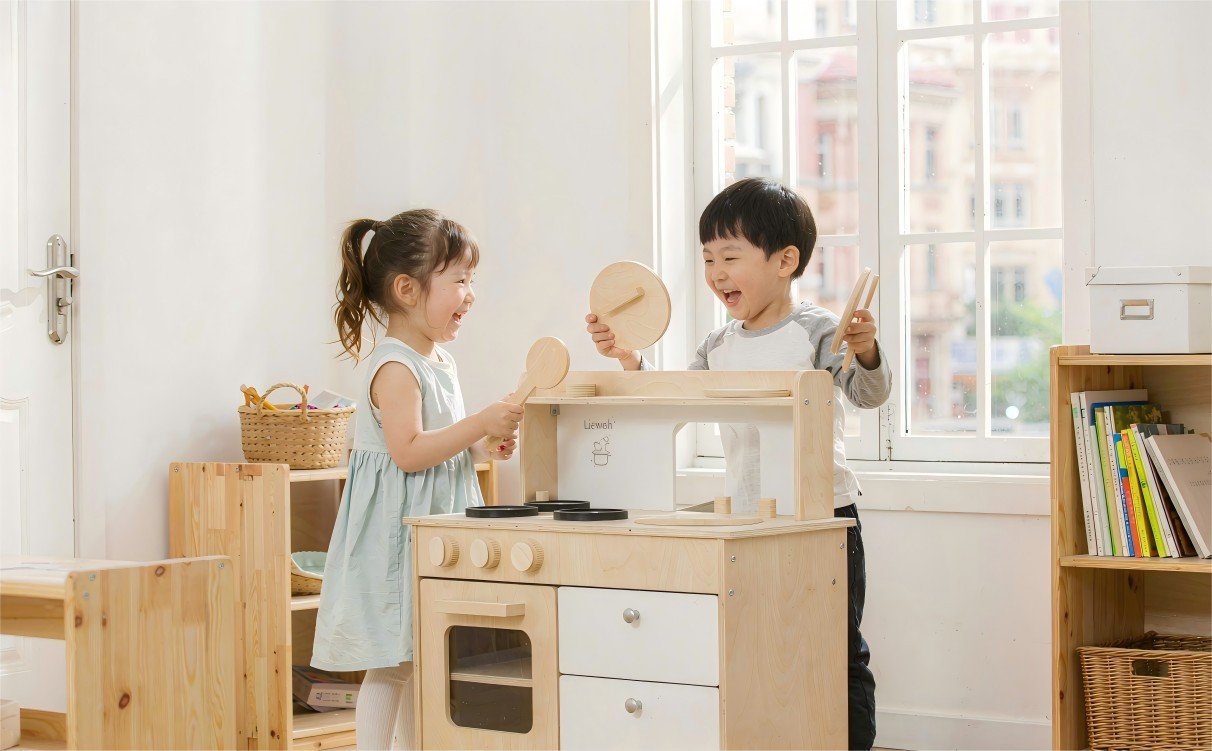
Watch a group of children around a wooden play kitchen and you will see something remarkable happening: a two-year-old handing a wooden apple to a friend, a four-year-old announcing "dinner's ready!", and a five-year-old patiently explaining the "rules" of the game they have just invented together. Moments like these are not just adorable — they are the building blocks of lifelong social competence. Wooden pretend toys play a significant role in developing children's social skills, offering opportunities for collaboration, communication, and empathy. Through imaginative play, these simple yet versatile toys create a platform for children to interact meaningfully with others, fostering social growth in a natural and engaging way. In this article, we take a closer look at how role-play with wooden pretend play toys shapes the way children connect with the world — and what parents, educators, and toy brands should look for when choosing them. Pretend play — also called symbolic or role-play — is the stage when children use objects and imagination to act out scenarios from real life: cooking a meal, running a shop, caring for a baby, or building a house. Developmental psychologists generally observe the earliest symbolic play emerging between 18 and 24 months, and it becomes richer and more social through the preschool years. What makes pretend play so valuable is that it is inherently social. To keep a shared pretend scenario alive, children must agree on roles, exchange ideas, read each other's emotions, and adjust the story as it unfolds. As we explore in our article on why learning through play is effective, play is not a break from development — it is development. Research summarized in global education experts' insights on wooden toys and child development consistently links role-play with stronger social and language outcomes in early childhood. One of the primary ways wooden pretend toys enhance social skills is by encouraging cooperative play. Toys like wooden kitchen sets, toolkits, or dollhouses invite multiple children to participate, promoting teamwork as they work together to prepare meals, build structures, or create stories. During these activities, children learn to share resources, take turns, and resolve conflicts — essential skills for navigating social relationships. Because a wooden play kitchen has no script and no batteries, the children must supply the imagination themselves. One child may become the chef, another the waiter, a third the customer. The play only works if everyone agrees — and that agreement, renegotiated dozens of times an afternoon, is cooperation in its purest form. Similarly, a wooden dollhouse becomes a shared world that children furnish, decorate, and narrate together, while a wooden tool bench turns two little "carpenters" into a real project team dividing up the work. Communication skills flourish when children engage with wooden pretend toys. As they role-play different scenarios — such as running a shop or playing house — they practice expressing ideas, negotiating roles, and listening to their peers. This active exchange of thoughts and emotions helps children build confidence in verbal expression and understand the importance of effective communication. A market or shop set is a particularly rich language environment. When children play "grocery store" with a wooden coffee shop playset, the shopkeeper greets customers, describes products, quotes prices, and counts change, while the customer makes requests and asks questions. Children absorb transactional vocabulary — "How much is this?", "Would you like a bag?" — long before they can read it. Pairing the shop with a wooden cutting food set adds even more descriptive language: colors, shapes, tastes, and quantities, all rehearsed in conversation with peers. Wooden toys also support the development of empathy and understanding. When children take on different roles — whether as a parent caring for a doll or a builder working with teammates — they step into someone else's shoes, exploring diverse perspectives. This type of play helps children recognize emotions in others and respond with kindness and consideration. Bendable figures make this lesson tangible. With a set of wooden doll family figures, a child decides who is tired, who is hungry, who needs a hug — and then acts on it. Scene-based playsets work the same way: a wooden pirate ship playset or a farm set asks children to imagine what each character feels and needs, and how the crew or the farm family can help one another. This kind of emotional rehearsal is exactly what the Montessori approach encourages — a philosophy we examine in depth in why wooden Montessori toys are essential for child development. Additionally, the simplicity of wooden pretend toys encourages deeper interpersonal connections. Without the distractions of lights and sounds often found in electronic toys, children focus more on their interactions with peers, fostering stronger bonds and a greater sense of community. An electronic toy tends to direct the play: it flashes, it beeps, it tells the child what happens next. A wooden toy does the opposite — it waits for the child. That silence is an invitation for conversation. The natural texture and weight of wood also engage the senses in a calmer way, supporting longer, more focused play sessions. For a detailed comparison of materials and their impact on play quality, see what makes wooden toys different from plastic toys. To explore our full range of open-ended pretend toys and other categories such as educational toys, games, and kids' furniture, browse all wooden toy categories from FORESTOY. The social benefits of pretend play are well recognized beyond the family. Preschools, Montessori classrooms, and early-learning centers deliberately design "role-play corners" — kitchen areas, shops, workshops — because they observe firsthand how these spaces draw children into negotiation and collaboration. For toy brands and distributors serving the education sector, this means demand for wooden pretend toys is driven not only by nostalgia and aesthetics, but by documented developmental value. When evaluating or developing role-play products for your own line, several design factors determine how social the play can be: A generously sized kitchen or market counter lets several children play at once instead of waiting in line. Fewer fixed "answers" means more conversation — look for sets that children can reconfigure into new scenarios. Accessories such as pots, food pieces, or coins give children concrete props to talk about. Social play is physical play; rounded edges, non-toxic finishes, and solid construction are non-negotiable. Learn how we approach this in our safety and quality control process. If you are building or expanding a wooden toy brand, our guide on developing customized wooden toys from concept to mass production walks through each stage — from design brief to tooling, sampling, and export-ready packaging. Wooden pretend toys carry one more quiet lesson: care for the things we own and the world we live in. Sustainably sourced wood, water-based paints, and heirloom-level durability mean these toys are often passed from an older child to a younger one — a first, gentle experience of sharing and stewardship. At FORESTOY, every material is selected from renewable forests and every design is built to endure years of energetic group play, in line with our sustainability commitments. When a toy survives long enough to be handed down, its social story continues across generations. Through imaginative and collaborative play with wooden pretend toys, children develop essential social skills that prepare them for real-world relationships. These timeless toys not only nurture creativity but also lay the foundation for empathy, communication, and teamwork — shaping socially adept and compassionate individuals. For over two decades, FORESTOY has been dedicated to creating high-quality wooden toys that inspire imagination and learning. Our expert R&D team designs unique, durable toys crafted from sustainably sourced wood, combining eco-friendly materials with certified child safety. With advanced facilities, we ensure efficient production, rigorous quality checks, and timely delivery for brand owners, wholesalers, supermarkets, and e-commerce sellers worldwide. Whether you need an OEM adaptation of a proven bestseller or a fully custom wooden pretend toy developed from your own concept, our team is ready to help. Contact us today for tailored solutions and request your free product brochure and catalog — or start your custom toy project directly through our catalog download center.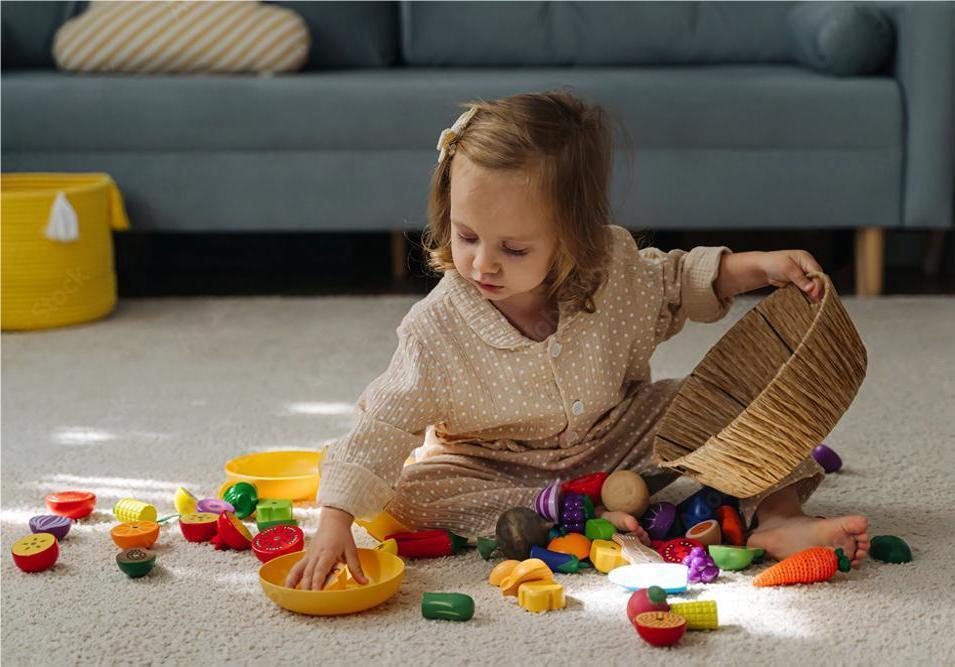
Key Takeaways
What Is Pretend Play, and Why Does It Matter?
1. Building Cooperative Play: Sharing, Turn-Taking, and Teamwork
2. Growing Communication Skills Through Role-Play Scenarios
3. Developing Empathy and Emotional Understanding
4. Screen-Free Simplicity: Why Wooden Toys Create Deeper Connections
5. From Playroom to Classroom: What Educators and Brands Should Know
Scale for Two or More Children
Open-Endedness
Realistic, Story-Rich Details
Safety and Durability
6. Choosing Toys That Last: Sustainability as Part of the Story
Final Takeaway
Partner with FORESTOY — Bring Pretend Play to Your Market