How to Choose the Perfect Wooden Educational Toy for Every Age
WOODEN EDUCATIONAL TOY BUYING GUIDE
Choosing the Perfect Wooden Educational Toy for Every Age
Picking the right wooden educational toy is less about finding the "best" toy and more about matching the toy to where your child actually is — in their grip, in their curiosity, and in the way they are beginning to make sense of the world. This guide walks you through every stage, from a baby's first grasp to the deeper strategic play of older kids, so every wooden toy you bring home does real work for the child who holds it.

Why Age-Appropriate Wooden Educational Toys Matter
A well-chosen wooden educational toy does three things at once: it matches their developmental needs, it can support the next skill they are ready to learn, and it stays safe in small hands. Unlike mass-produced plastic toys, solid wood offers weight, warmth, and longevity — a single well-made wooden education toy can move from baby tummy-time to a toddler's first puzzle to a preschooler's open-ended play set, becoming part of a family's story rather than a landfill statistic.
Below is a stage-by-stage framework that parents, teachers, and gift-buyers can rely on, built on two decades of design feedback from our factory floor and our wholesale customers around the world.
Infants (0–12 months): Sensory First, Safety Always
Babies are just beginning to explore their surroundings through touch, sound, and sight. At this stage the toy is essentially an extension of the caregiver's hand — it must be safe to mouth, impossible to swallow, and satisfying to grasp.

What to look for
- Soft, smooth wooden rattles with no sharp edges or small detachable parts.
- Natural-wood teethers sized for small gums and finished with food-safe oils.
- Simple wooden rings and grasping beads in high-contrast colors for visual development.
- Chunky wooden blocks with rounded corners — perfect first objects to stack, drop, and re-listening.
Why it matters: these toys build hand-eye coordination, grip strength, and the discovery of new textures — the foundation for every later skill on this list.
Toddlers (12–24 months): Cause, Effect, and Tiny Triumphs
Toddlers are beginning to explore cause and effect, basic problem-solving, and the joyful frustration of fitting the wrong shape into the wrong hole. They love toys they can manipulate, sort, and proudly carry across the room.
What to look for
- Wooden shape sorters and stackers — the gold standard for early geometry and patience.
- Chunky wooden puzzles with large, easy-to-handle knobs sized for tiny hands.
- Push-and-pull toys like wooden animals on wheels that invite upright walking and storytelling on the move.
- Simple nesting cups and rainbow stackers that grow with the child from 12 months to 3 years.
Why it matters: these toys train fine motor control, spatial awareness, and the first taste of "I did it myself" — a confidence milestone that shapes every later challenge-approach.
Preschoolers (3–4 years): Letters, Numbers, and Big Imaginations
Preschoolers are developing more complex problem-solving and social skills. They enjoy imaginative play, ask "why?" about everything, and are beginning to grasp early concepts like letters, numbers, and patterns. Their play is no longer solo — they want someone to play with.
What to look for
- Wooden alphabet and number blocks that double as first readers and first builders.
- Wooden building sets with mixed shapes for engineering play that scales with imagination.
- Wooden play kitchens for social role-play — one of the most studied tools for early empathy.
- Wooden food and fruit sets that extend kitchen play into counting, sorting, and "grocery store" math.
- Wooden dollhouses and miniature furniture for narrative play and quiet, focused attention.
Why it matters: this is the window where early literacy, numeracy, creativity, and social cooperation are wired in. The right toy, used together with a parent or peer, does the heavy lifting.
Early Elementary (5–6 years): STEM Thinking and Confident Making
Children at this stage are ready for more challenging activities that stimulate their growing cognitive and creative abilities. They can follow multi-step instructions, persist through small failures, and start to ask how things actually work.
What to look for
- STEM activity sets and wooden tool benches that introduce real mechanisms — screws, gears, latches.
- More complex wooden mazes and lacing toys that train the hand for handwriting.
- Multi-layer puzzles with intricate designs and small-batch mechanics.
- Wooden art supplies and craft kits for unhurried, screen-free creative time.
- Wooden store and market playsets for early money math and negotiation play.
Why it matters: these toys promote problem-solving, creativity, and critical thinking — and they introduce basic scientific and engineering principles through hands-on doing, not screens.

Older Kids (7+ years): Strategy, Cooperation, and Quiet Mastery
At this age, children can engage in deeper learning, strategic play, and cooperative activities. They benefit from toys that challenge their growing intellect while encouraging collaborative play — and that still feel "cool" to bring out when peers visit.
What to look for
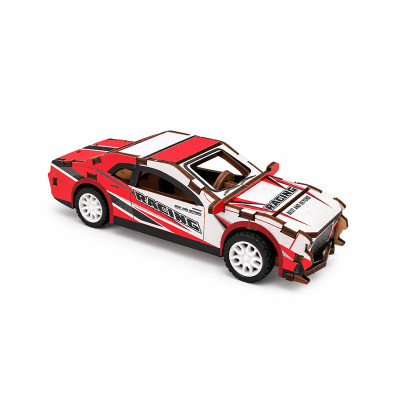
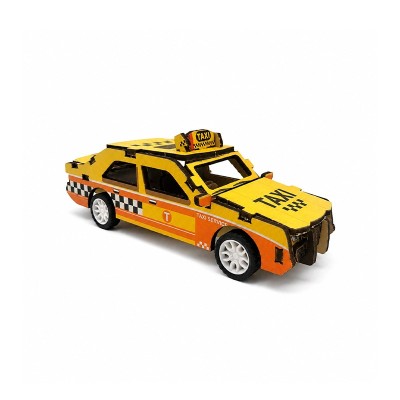
- Advanced puzzles and 3D wooden builds with dozens of pieces and longer time-on-task.
- Wooden board games and strategy games for turn-taking, planning, and friendly competition.
- Wooden game collections that include classics and modern brain-teasers for family game nights.
- Larger wooden building sets with more parts for ambitious, multi-day creations.
- Wooden zen garden kits and open-ended calm-play sets that help older kids reset after a long school day.
Why it matters: these toys foster advanced problem-solving, strategic thinking, teamwork, and fine motor development — and they pull the whole family back to the same table.
Age-by-Age Wooden Educational Toy Cheat Sheet
A quick reference for parents and gift-buyers. Use it before you buy, and again as your child grows.
| Age | Core Skill | Recommended Wooden Toy | Why It Works |
|---|---|---|---|
| 0–12 mo | Grasp & sense | Wooden rattle & teether | Builds grip strength and texture discovery |
| 12–24 mo | Sort & stack | Wooden shape sorter & stacker | Trains fine motor and shape recognition |
| 3–4 yrs | Imagine & build | Wooden alphabet blocks | Early literacy plus open-ended building |
| 3–4 yrs | Role-play | Wooden play kitchen | Social-emotional growth through pretend play |
| 5–6 yrs | Engineer & create | Wooden tool & activity set | Introduces real mechanisms and STEM thinking |
| 7+ yrs | Strategy & cooperate | Wooden board game | Turn-taking, planning, family play |
General Tips for Choosing the Right Wooden Educational Toy
Follow the child's interest
If a child loves animals, lean into wooden animal-on-wheels and wooden doll family sets. If they enjoy building, lean into wooden block sets.
Respect age guidance
Always choose toys that match the child's developmental stage to ensure they are both safe and appropriately challenging — not too easy, not too far ahead.
Check quality and safety
Look for non-toxic finishes, smooth edges, and certified wood. A well-made wooden education toy should outlast several children.
Prefer open-ended design
Toys that can be used in more than one way — building, sorting, narrating — grow with the child and stay in rotation rather than the back of a closet.
Why Parents and Educators Trust FORESTOY Wooden Educational Toys
Behind every wooden educational toy on our line is 20+ years of design refinement. We are not a trading company — we manufacture on our own floor, with our own R&D team, advanced CNC cutting, multi-stage sanding, and a final hand-finish on every edge. That is why our toys pass safety audits in the EU, US, and AU on the first try.
Sustainably Sourced Wood
Beech, birch, pine, maple, and FSC-certified substrates — chosen for grain stability and child-safe finishing.
Non-Toxic Finishes
Water-based stains, food-grade oils. No phthalates, no heavy metals, no sharp edges.
Built to Outlast Childhood
Designed for daily classroom use, hand-me-down, and the kind of rough play kids actually give toys.
Wholesale & OEM Ready
Low MOQ, custom branding, retail-ready packaging. Learn more on our about page.
FAQs About Choosing Wooden Educational Toys
Talk to a Real Wooden-Toy Maker
If you are a parent looking for the right toy for your child, a teacher building out a classroom, or a retailer sourcing your next season — we are here. Send us a quick message and we will recommend the right wooden education toy line for your age range, your market, and your budget. For more on how children learn through open-ended play, see our guide on learning through play.