OEM vs. ODM Wooden Toys: Which Manufacturing Model Is Right for Your Brand?
Almost every conversation between a brand and a wooden toys manufacturer OEM ODM factory starts with the same question: do you bring the design, or do you choose one of ours? OEM and ODM are the two dominant cooperation models in wooden toys OEM ODM sourcing, and the difference between them shapes your tooling budget, your timeline, your exclusivity and ultimately your margin.
This guide is written for brand owners, retailers, e-commerce sellers and product developers. We define both models the way factories actually use the terms, compare them across five practical dimensions, and give you a decision framework for building a product portfolio that mixes the two. For the full step-by-step mechanics of the custom route, our OEM wooden toy development guide covers the six-stage process in detail.
OEM and ODM in the Wooden Toy Industry
Wooden toys occupy an interesting position in the toy industry. Unlike injection-molded plastic, a large share of wooden toy production is built on CNC machining, manual assembly and water-based finishing — processes that can produce either a buyer-owned design or a factory-owned design with very little changeover. That flexibility is why nearly every established wooden toys manufacturer OEM ODM operation offers both models side by side.
The two terms come from the same supply-chain vocabulary but describe opposite starting points:
- OEM (Original Equipment Manufacturer) — the brand owns the design; the factory produces to it.
- ODM (Original Design Manufacturer) — the factory owns the design; the brand selects, customizes and rebrands it.
- OBM / wholesale — the factory owns both the design and the brand; the buyer simply purchases finished goods. This is ordinary wholesale, covered in our wholesale buying guide.
None of the three is "better." The right choice depends on what your brand actually needs to own: the product, the speed, or the cash.
What Is OEM for Wooden Toys?
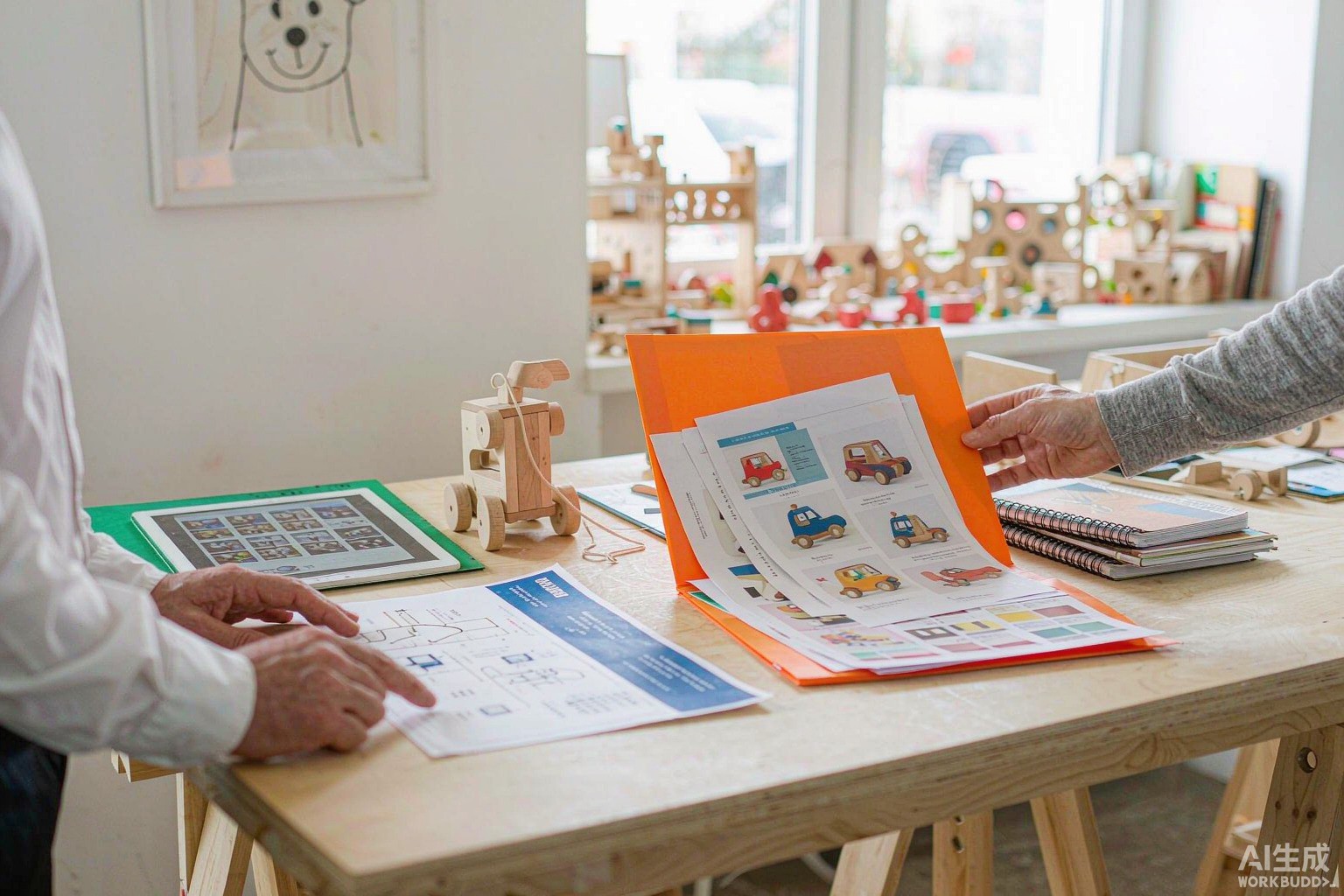
In an OEM engagement, the brand supplies the product definition — drawings, CAD files, samples to reverse-engineer, Pantone references, packaging artwork — and the OEM wooden toys manufacturer turns that definition into a retail-ready product. The factory contributes engineering, tooling, materials, finishing and QC; the brand keeps the intellectual property and the market position.
For a wooden toy OEM China program, the typical development arc runs from a feasibility review (5–10 business days), through a white mockup (USD 50–300 per design), to finished prototype approval, tooling, and a mass production run of 45–60 days. First-batch MOQs usually start around 500–2,000 units per SKU because the factory needs volume to amortize the tooling and engineering hours your design consumes.
OEM is the model to choose when the product itself is the differentiator — a new mechanism, a proprietary shape, a licensed character, a Montessori method you want to package in a specific way. The trade-offs are capital (tooling, prototypes, packaging plates), time (typically 80–120 days from design freeze to goods on water) and responsibility (compliance testing for your exact design sits on your critical path). Our OEM and ODM service page shows how the two routes are structured under one production system.
What Is ODM for Wooden Toys?
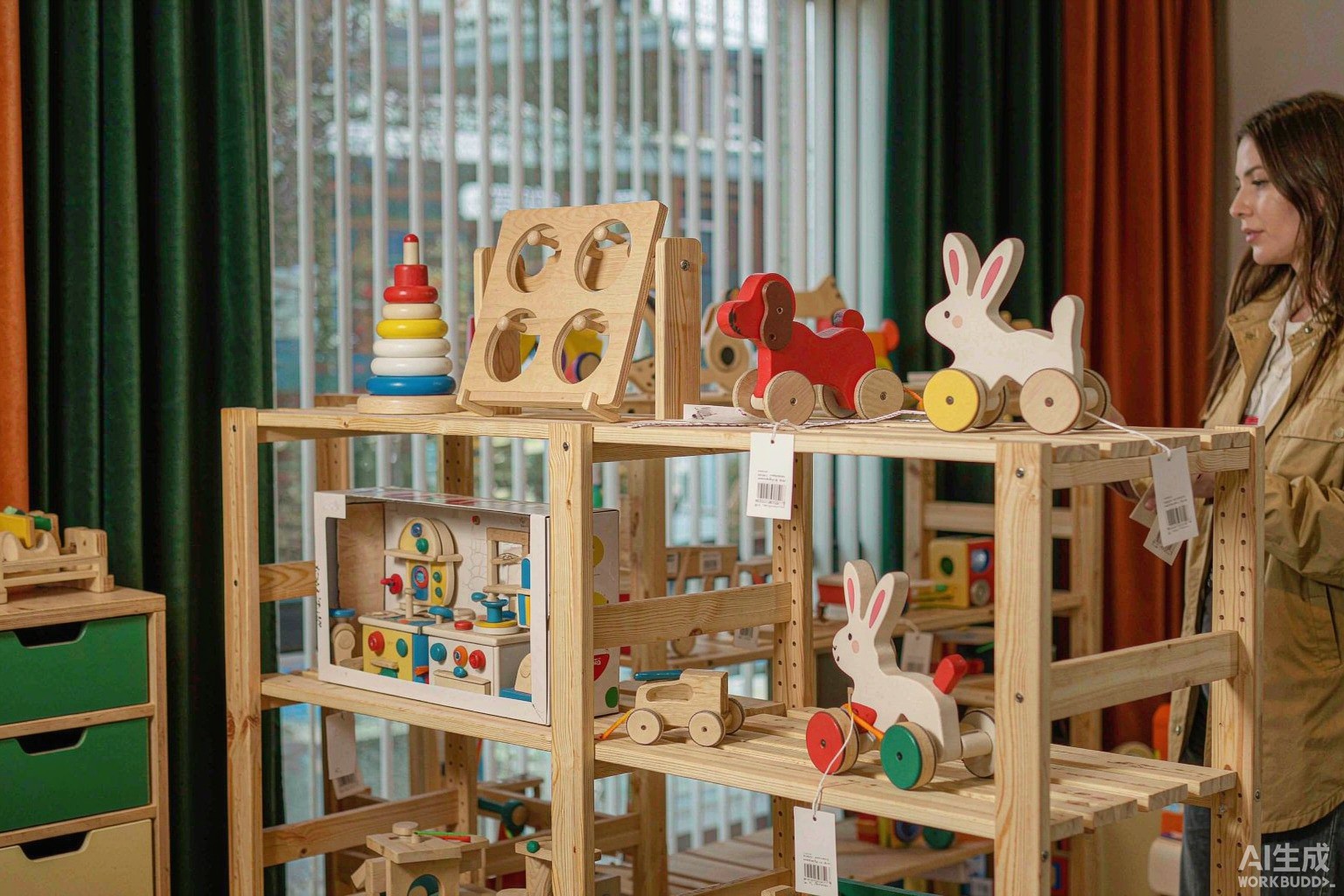
In an ODM engagement, the ODM wooden toys manufacturer has already invested in the design, the prototypes and often the tooling. The brand browses a catalog or a showroom, selects a platform product, and then customizes the layers that matter commercially: colorways, finishes, logo application, packaging, and sometimes minor geometry tweaks such as an extra accessory or a different piece count.
A wooden toy ODM China project skips the entire front end of OEM development. There is no feasibility memo, no white mockup, no tooling decision — the platform is proven. Sampling is faster (7–15 days against OEM's multi-stage approval chain), the first order can be smaller, and the compliance file for the base product already exists, with the brand's customization layered on top.
The trade-off is exclusivity. A catalog product can be sold to your competitors, often with different branding. For a wooden toys ODM China buyer, the practical mitigations are contractual rather than technical: territory restrictions, category exclusivity for defined channels, or agreed minimum reorder volumes that make it uneconomic for the factory to resell the configuration. None of these gives you IP — they give you a head start.
OEM vs. ODM: Key Differences
The two models diverge across five dimensions. The numbers below reflect 2025–2026 ranges from published manufacturer quotes, buyer playbooks and our own factory records for wooden toys specifically.
Design Ownership
OEM transfers or retains design IP with the buyer; ODM keeps it with the factory. Ownership is what lets you register the product, defend it on marketplaces, and build multi-year line extensions on the same platform. If your business model depends on a product no competitor can copy, ownership is not negotiable — and that points to OEM regardless of cost.
Development Cost
ODM's cost advantage is structural: the factory amortizes design and tooling across every buyer of that platform, so you pay only for customization. Typical custom layers — logo printing, custom color matching (about USD 200–600 setup), and packaging artwork (about USD 1,500–5,000 for a print-ready dieline) — are shared by both models. What ODM avoids is exclusive tooling, which for wooden toys ranges from about USD 1,000–3,000 for a CNC-only design to USD 15,000–75,000 for multi-part sets with steel molds.
Development Time
Time-to-market is where ODM usually wins. An OEM wooden toy runs 80–120 days from design freeze to goods on water, including 15–25 days of tooling where molds are involved. An ODM order can be sampled in 7–15 days and, because the platform is already production-proven, moves into the same 45–60 day mass production window without the engineering risk. For seasonal buying — Q4 shelf dates set against spring order deadlines — that 30–60 day difference frequently decides the model.
Customization Level
OEM customizes everything; ODM customizes the commercially visible layers. In practice, buyers are often surprised how far ODM customization reaches: full recoloring, revised piece counts, extra accessories, custom packaging structures, and branded elements across the product. What ODM does not change cheaply is the underlying geometry — altering the core shape re-opens tooling and testing, at which point you are effectively running an OEM project anyway.
MOQ and Production Planning
Because ODM platforms are pre-tooled, factories can accept smaller first orders and plan production across multiple buyers on shared capacity. OEM MOQs are higher because your tooling occupies dedicated line time and the factory needs the volume to make the engineering hours economic. Our MOQ and capability page explains how the two models differ on a single production calendar. Whichever model you choose, production planning discipline is identical: freeze the specification, approve the sample, then commit the run.
When OEM Makes More Sense
Choose OEM when most of the following are true:
- You have proof of demand — a distribution channel, retail commitments, or sell-through data from a pilot. OEM is an investment decision, not an experiment.
- The product is a multi-year platform. You plan colorways, extensions and co-branded editions on the same tooling for 18–36 months.
- Exclusivity drives your margin. Marketplace data on private-label children's products shows gross margins of 48–60% for custom branded products versus 18–22% for generic white-label — roughly 2.7×. If your pricing strategy needs that premium, you need to own the design.
- You can carry the compliance load. A bespoke design must pass EN 71, ASTM F963 and ISO 8124 testing on its own bill of materials. An experienced wooden toy OEM supplier will run this in parallel with tooling, but the timeline risk sits with the launch date.
If three or more of these hold, read our OEM development guide next — it walks the six-stage process and the cost table in full.
When ODM Makes More Sense
Choose ODM when this description fits better:
- You are entering a category, not defining one. A wooden puzzle line, a stacking-tower range or a pretend-play kitchen set are proven platforms — your differentiation is curation, branding and price positioning.
- The calendar is tight. If the shelf date is fixed and the OEM timeline does not fit, ODM's shorter sampling cycle is the pragmatic route.
- You want to test before you invest. A smaller first order on an ODM platform generates real sell-through data for a fraction of the capital, and the winner can graduate to an OEM-exclusive version later.
- Speed of assortment breadth matters. Retail buyers building a category from scratch often launch ten ODM SKUs in parallel rather than two OEM heroes. A capable wooden toy ODM supplier will support that with mixed-SKU containers and shared compliance files.
For retailers building exactly that kind of broad own-brand range, our private-label wooden toys guide covers artwork, dielines, barcodes and the rebranding workflow end to end.
Can a Brand Combine OEM and ODM?
Not only can you combine them — the most resilient wooden toy portfolios do. Three hybrid patterns work well in practice:
- ODM pilot → OEM graduate. Launch a catalog platform under your brand, prove sell-through, then commission an exclusive OEM evolution of the same product once volume justifies tooling. You keep the customer data and upgrade the moat.
- OEM heroes + ODM fillers. One or two OEM hero products anchor the brand story and margin; ODM SKUs fill the assortment and keep the average order value attractive for distributors. This is the standard architecture for a 12–24 SKU wooden toy line.
- Shared-platform exclusivity. Negotiate category or channel exclusivity on an ODM platform in your home market. You get near-OEM differentiation in the channel that matters without OEM capital.
Forestoy's OEM and ODM Workflow
Forestoy runs both models on the same production system, which makes hybrid portfolios operationally simple: one QC standard, one compliance team, one logistics desk. As a wooden toys manufacturer OEM ODM partner established in 2003, we supply 100+ international brands from a 1,500+ SKU catalog with in-house design, tooling and monthly capacity of about 200,000 units. Our design and development page documents the sampling workflow, and production is scheduled on the capacity described on our manufacturing capacity page.
What an engagement typically looks like:
- Model recommendation. Send your brief, catalog shortlist or both. Our product team replies within two business days with an honest recommendation — if ODM gets you to market faster at your volume, we say so.
- Sampling. OEM: white mockup in 5–10 days, then a finished prototype for written approval. ODM: a customized counter-sample of the catalog platform in 7–15 days.
- Compliance and customization. Colors, logo application and packaging proceed in parallel with EN 71 / ASTM F963 / ISO 8124 testing coordinated by our quality control team; FSC-certified material options are covered on our sustainability page.
- Production and inspection. 45–60 days with in-line and final AQL 1.5 / 2.5 inspection and a pre-shipment report with photos.
- Logistics. FOB Ningbo, EXW or DDP; mixed OEM/ODM orders ship on the same container with consolidated documentation.
You can browse platforms suitable for ODM customization across our wooden toys product catalog — stacking toys, puzzles, game sets and educational ranges are the most customized categories, and our educational wooden toys guide shows how learning-value design decisions interact with both models.
Choosing the Right Model for Your Product Portfolio
The OEM/ODM decision is not a one-time choice; it is an allocation strategy. A simple three-question test sorts most portfolios:
- Does this SKU need to be un-copyable to work? Yes → OEM. No → ODM.
- Does the launch date survive an 80–120 day development cycle? Yes → OEM is available. No → ODM, or shift the launch window.
- Will the SKU reorder for at least 18 months? Yes → OEM tooling amortizes. No → ODM keeps your capital free.
Score each SKU honestly and the portfolio usually lands at one or two OEM heroes plus a supporting ODM range — with the ODM winners promoted to OEM as the data comes in. When you extend into packaging-led differentiation, our private-label packaging guide explains how custom retail packaging turns either model into a shelf-ready own-brand product.
Not Sure Whether OEM or ODM Fits Your Project?
Contact Forestoy and let our product team recommend the most practical route — we will review your brief or catalog shortlist and reply with feasibility, cost ranges and timelines for both models within two business days.
Sources: Klugonyx (2026). The Emerging Brand's Playbook for the U.S. Toy and Game Industry. Private-label vs. white-label performance metrics; tooling cost ranges.
CPS Toys (2026). Private-Label OEM Process Guide. Sample lead times, tooling amortization and ownership norms.
Forestoy internal OEM/ODM project records, 2024–2026. Sampling, tooling, MOQ and mass production ranges.