Wooden Toy Manufacturer China: 10 Questions to Ask Before Choosing a Supplier
The global wooden toys market reached USD 31.2 billion in 2025 and is projected to hit USD 57.1 billion by 2035 (6% CAGR, Global Market Insights, 2026). Yet the same year that demand soared, U.S. regulators issued 376 product recalls and safety warnings — more than all of 2024 — with Chinese-origin products accounting for nearly 66% of them, up from just under half the year before (CPSC, 2025). The lesson for B2B buyers is blunt: the country that makes 40% of the world's wooden toys also concentrates the risk — and the risk lives or dies with the wooden toy manufacturer China you choose. This guide gives you the exact interview script: 10 questions to ask a wooden toy manufacturer in China before signing an order. Each question is designed to expose what a brochure cannot — MOQ reality, safety-testing depth, production capacity, quality control discipline, and logistics competence — so you can separate a genuine wooden toy factory China from a middleman with a website, and choose a wooden toy supplier China you can actually verify. Wooden toys sit at the intersection of two unforgiving pressures: child safety regulation and retail margin. A single compliance failure — a loose small part, a lead-containing paint, an unsafe finish — can trigger a recall that erases years of brand equity. The data explains why evaluation must come before purchase: None of this means you should avoid sourcing from China — it means you must source from the right factory. A certified, export-experienced wooden toys manufacturer in China turns regulatory pressure into a competitive advantage: testing documentation, audit-ready processes, and traceable materials. The 10 questions below are how you verify that capability in one conversation. Use these ten questions as your supplier interview framework. Ask them early, ask them twice, and ask for documented proof — a factory's answer is only as good as its evidence. Wood is a living material: it expands, contracts, and varies in density, and only factories with years of production data know how to engineer around it — kiln-dried hardwood selection, moisture control, joint design, and finish chemistry. Ask any prospective wood toy manufacturer China for its founding year and continuous years in wooden toy production. As a benchmark, the Yunhe cluster in Zhejiang — which produces about 40% of the world's wooden toys — is built on manufacturers with 15–30 years of export experience (People's Daily, 2025). A wooden toy supplier manufacturer with two decades of continuous production has likely survived every major standards revision — EN 71, ASTM F963, ISO 8124, CPSIA — and documented its way through each one. Product range is a proxy for R&D depth. A manufacturer that engineers a toddler learning tower can also engineer a shape sorter, a play kitchen, or a musical toy — because the underlying disciplines (structural design, safety testing, finish control) are shared. Ask for the factory's full catalog and check whether it spans educational toys, pretend play, games, music toys, kids' furniture, and Montessori-inspired products. A narrow, copycat catalog signals limited development capacity; a wide wooden toy product range signals a partner who can grow your assortment season after season. Cross-reference the answer against their OEM and ODM project history — real brand clients are the strongest evidence. MOQ is where expectation-setting lives or dies. Ask for: Watch for suppliers who quote impossibly short lead times; in woodworking, rushed drying and finishing are precisely where quality defects are born. Flexible MOQ options for customized orders are a hallmark of a factory that services brands rather than only bulk traders. This question separates a factory from a pure production line. Ask whether the manufacturer runs in-house design and engineering teams, whether they have handled private-label projects, and what their product development workflow looks like. A full-service wooden toy manufacturing company should offer: Review the manufacturer's custom wooden toy design and development process and ask for case studies: how many brand clients they serve (100+ is a strong signal for a 20-year-old factory) and whether those projects involved multi-category, multi-SKU programs. This is the most consequential question on the list. Ask the factory to name — and document — every standard it tests against: Then verify: does the factory test in-house, with third-party labs (SGS, TUV, BV, Intertek), or both? Can they produce valid test reports matching your target market? With EU Safety Gate toy alerts rising 11.5% year-over-year and chemical migration among the top violations, certification depth is not paperwork — it is market access (EU Safety Gate, 2025). If your brand positions on eco-values, also ask about responsible materials and finishes — a partner producing sustainable wooden toys with FSC™ Chain of Custody turns compliance into a retail selling point. Ask for the factory's quality control system in concrete terms: incoming material inspection, in-process checks at each station, finished-goods inspection, and the AQL (Acceptable Quality Limit) sampling plan used for final inspection. A professional wooden toy factory typically operates AQL levels of 2.5 for major defects and 4.0 for minor defects on final inspection. Ask whether they offer free pre-shipment inspection — a factory confident in its quality will usually include three rounds of free inspection with third-party agencies (SGS/TUV/BV/ITS) on qualified orders, and will welcome you or your inspector into their wooden toy quality control and safety testing workflow. Retail-ready packaging is a core B2B requirement, not a nice-to-have. Ask about: A factory that handles packaging in-house — including graphic design and print management — removes an entire coordination layer between you and your product's final look. Capacity defines whether the factory can scale with your brand. Ask for monthly production output in pieces, the number of production lines, workforce size, and — critically — how much of that capacity is already committed. A factory running at 100% capacity may quote your order anyway, then ship late. A credible mid-size wooden toy factory China serving 100+ international brands typically runs monthly output in the 200,000-piece range with dedicated assembly, sanding, painting, and finishing lines. Review the factory's wooden toy factory manufacturing capacity to understand what "scale" really means for your SKUs. Your quality control should never depend solely on the supplier's self-reporting. Ask directly: will the factory accept pre-shipment inspection by a third-party agency of your choosing (SGS, TUV, BV, Intertek)? Will they provide the inspection report and correct non-conforming goods? Factories with export-grade systems expect third-party audits as routine and will name the agencies they currently work with. If a supplier hesitates or offers only self-inspection, treat it as a red flag — 50% of Chinese-origin CPSC recalls in 2025 involved products that failed to meet safety standards, often detectable only through independent testing. The final question determines whether your goods actually arrive — compliant, on time, and documented. Ask about: Before you commit, score every candidate against this checklist. If you need the full evaluation framework first, read our guide on how to choose a reliable wooden toy manufacturer for your brand — and compare sourcing models in our B2B wholesale sourcing guide. A genuine wooden toy manufacturers China partner should tick all of the boxes: Forestoy has manufactured wooden toys and kids' furniture since 2003 — more than 20 years of continuous production, making it exactly the kind of wooden toy manufacturer China the questions above are designed to surface. The fundamentals are documented on our wooden toy manufacturing experience page: More than capability, we offer accountability: a factory you can visit, audit, and inspect — and a long-term partner invested in your brand's growth. Our custom wooden toy solutions team will answer all ten questions with documentation, not promises. Stop guessing and start verifying. Forestoy will answer all 10 questions with documented evidence, send you samples, and walk you through our factory systems.
Sources:Why Supplier Evaluation Matters for Wooden Toys
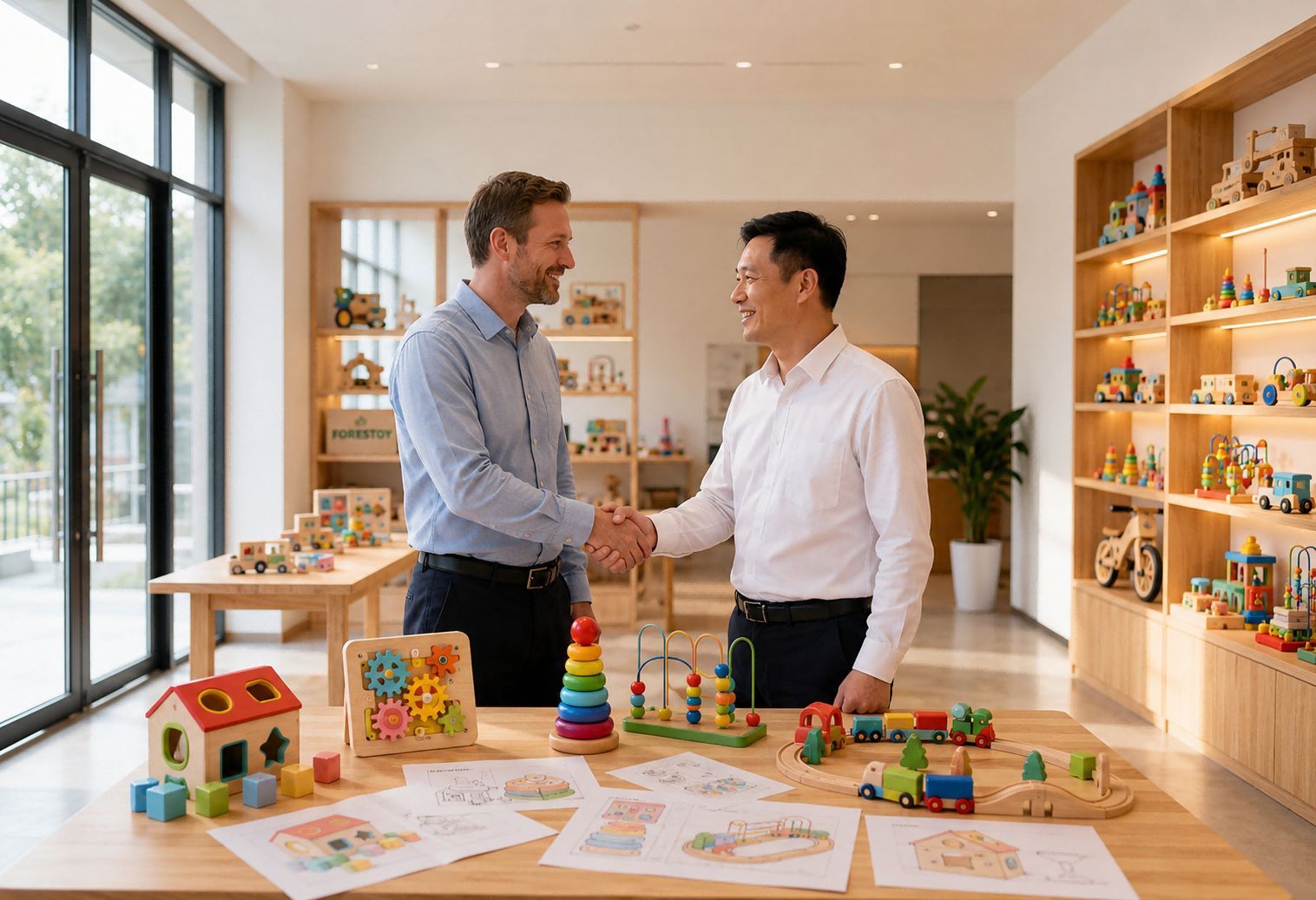
10 Questions to Ask a Wooden Toy Manufacturer in China
1. How Long Have You Been Manufacturing Wooden Toys?
2. What Wooden Toy Categories Do You Produce?
3. What Are Your MOQ and Sample Lead Times?
4. Can You Provide OEM and ODM Services?

5. Which Toy Safety Standards Do You Support?
Standard Market What It Covers EN 71 European Union Mechanical, physical, flammability and chemical safety requirements ASTM F963-23 United States Mandatory toy safety standard under CPSIA; CPSC added new requirements in 2025, including mandatory rules for water-absorbing beads effective March 12, 2026 (90 FR 57820) ISO 8124 International Global benchmark for mechanical, physical and chemical toy safety CPSIA United States Lead content, phthalates and third-party testing certification requirements FSC™ Chain of Custody Global Verifies wood is sourced from responsibly managed, certified forests 6. How Do You Control Quality During Production?
7. Can You Customize Packaging and Branding?
8. What Is Your Production Capacity?
9. Can You Support Third-Party Inspection?
10. What Are Your Export and Logistics Capabilities?
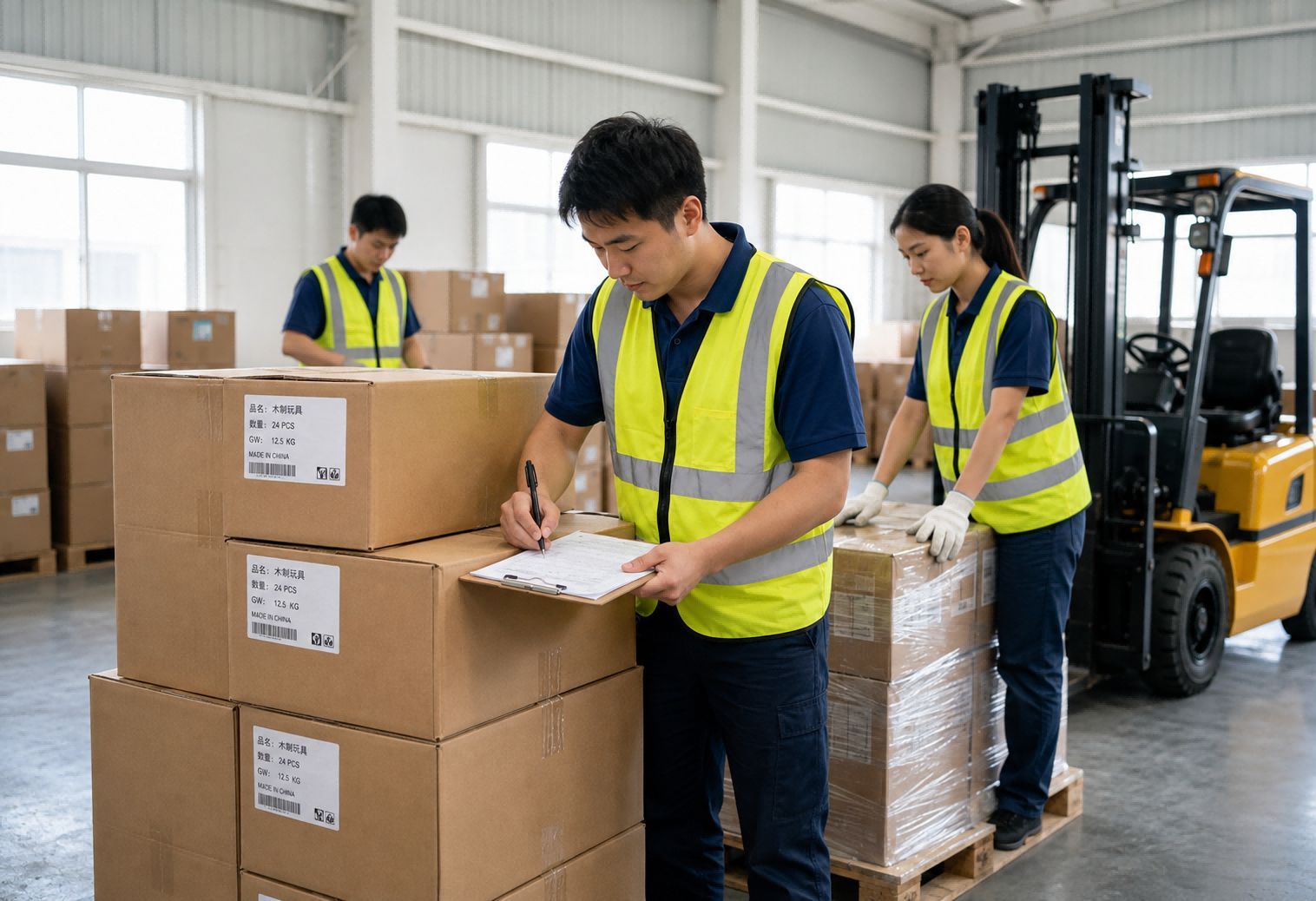
Wooden Toy Manufacturer Checklist for Buyers
Why Forestoy Fits Long-Term B2B Partnerships

Vet Your Supplier With Confidence — Talk to a Wooden Toy Manufacturer
Talk to a Wooden Toy Manufacturer →
Average response time: within 12 business hours
Global Market Insights, "Wooden Toy Market Size & Forecast 2026–2035"; CPSC (U.S. Consumer Product Safety Commission), recall enforcement statements and data, 2025; EU Safety Gate (RAPEX), Q1–Q3 2025 alert statistics; People's Daily (浙江在线/人民网), Yunhe wooden toy industry data, 2025; ASTM F963-23 compliance guidance and Federal Register 90 FR 57820 (water-absorbing beads, effective March 12, 2026); ISO 8124 / EN 71 / CPSIA standards documentation; FSC™ Trademark License C131173. Forestoy company data from official website (forestoy.com), 2026.