Wooden Toy Packaging for Retail: A China Manufacturer's Guide to Private-Label Packaging
In wooden toys, the box is the only marketing asset that ships with every single unit — and for most retail buyers it is the difference between a product that sells through and a product that comes back. Yet packaging is where private-label projects most often stall: artwork that ignores compliance text, barcodes that fail retailer scan grades, and MOQ surprises that surface after the toy itself is already engineered.
This guide is written for brand owners, private-label buyers, wholesalers and e-commerce sellers sourcing private label wooden toys from China. It walks through the four packaging structures that dominate the category, exactly what must appear on a compliant pack, how barcode and labeling rules work in 2026, how packaging drives MOQ and cost, and the QC checkpoints we run on every packed carton before it leaves our floor.
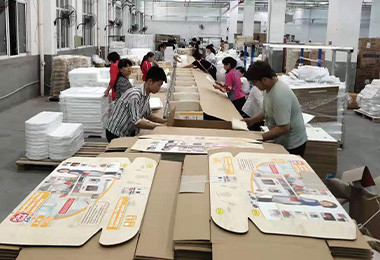
Why Packaging Matters for Wooden Toy Brands
Wooden toys sell on trust — natural materials, safe finishes, developmental value — and packaging is where a buyer either confirms that trust or loses it. A beautifully finished beech toy in a flimsy, poorly printed box reads as inconsistent. Global toy sales have stayed above USD 100 billion a year in recent industry reviews from Statista and Circana, but the fastest-growing share of that value is premium and sustainability-positioned product, precisely the shelf space where packaging quality is judged most harshly.
For a B2B buyer the commercial stakes are concrete. Packaging carries your brand mark and your product story on every unit, so it is the cheapest repeated advertising you will ever buy. It carries the legally required safety information, so it is also a compliance surface — mistakes here can block a shipment at customs or trigger a retailer chargeback. And it protects the product through a 30- to 40-day sea freight cycle followed by rough last-mile handling, so it directly controls your damage-return rate. Industry experience across wooden toy catalogues consistently puts packaging at roughly 8–15% of ex-works cost; treating that spend as an afterthought is the most expensive saving in the category.
Wooden Toy Packaging Options
Four structures cover almost every private label wooden toys brief we receive. Each carries different cost, MOQ and sustainability implications, and the right answer depends on your channel mix.
Color Boxes
The default for specialty retail and gifting. A printed paper wrap laminated over E-flute or B-flute corrugate, or solid bleached board for smaller sets, printed CMYK plus one or two Pantone spot colours for brand accuracy, finished with matte or gloss lamination. Color boxes deliver the strongest shelf impact and the most space for compliance and storytelling panels, but the print set-up cost means full custom artwork usually starts at around 1,000 boxes per design. For anyone building a custom wooden toys wholesale programme, this is the structure to budget for properly.
Kraft and Recyclable Packaging
Unbleached kraft board with one or two spot colours, or even a rubber stamp accent, has become the visual shorthand for natural and sustainable toys. It prints economically, it pairs visually with exposed wood grain, and it supports your FSC story: kraft board is widely available with certified fibre, and water-based or soy-based inks keep the recyclability claim honest. Kraft packaging also typically tolerates shorter print runs, which makes it attractive for SKU testing and Amazon bundles.
Window Packaging
A die-cut window lets the product sell itself — important for wooden toys, where grain, weight and finish quality are the actual value proposition. The critical specification is the film: use rPET rather than PVC, because PVC windows contaminate the paper recycling stream and are increasingly rejected by European retailers. A board-plus-rPET construction is kerbside recyclable in most EU markets, which matters for the packaging rules discussed below.
Retail Display Packaging
For supermarket and chain retail, shelf-ready packaging (SRP) and counter display units (PDQ) do the merchandising for you: a tear-away opening, a clear price-tag panel, and a footprint engineered to the retailer's shelf module. For e-commerce, frustration-free style mail-order packaging — as we design for e-commerce seller programmes — trades print layers for protective geometry, because the box must survive parcel networks unopened. Displays are also an MOQ lever: one display can carry mixed SKUs, letting a buyer present a fuller range without deep stock of any single item.
What Should Be Included on Wooden Toy Packaging?
A compliant retail pack is a checklist, not a design exercise. Every Forestoy artwork review verifies the following elements before a proof is released.
| Element | Requirement |
|---|---|
| Age grading | Age label must match the tested age range in the EN 71-1 or ASTM F963 assessment, and be printed in the mandatory format |
| Choking hazard warning | Toys with small parts or intended for under-3s must carry the EN 71-1 warning statement and, for the US market, the 16 CFR 1500.19 small-parts warning with required layout and lead-in text |
| CPSIA tracking label | US-bound children's products must carry permanent tracking information — manufacturer identifier, production date and batch — on the product and its packaging |
| EU responsible person | Under GPSR (EU) 2023/988, applicable since 13 December 2024, the pack or listing must identify an economic operator established in the EU with name and address |
| Country of origin | "Made in China" marking per US customs marking rules (19 CFR 134) and equivalent EU practice |
| Material and certification claims | FSC label claims must be covered by valid Chain-of-Custody certification; recyclability marks must match the actual construction |
| Barcode and price panel | GS1-licensed GTIN in the correct symbology and placement, plus any retailer-specific panel requirements |
| Care, safety and multilingual panels | Assembly and care instructions, battery warnings where applicable, and language coverage for every market in the distribution plan |
Artwork compliance is a service, not an upsell: our wooden toy safety and quality control system starts reviewing these elements at the design stage, when changes cost nothing.
Barcode, Labeling and Compliance Considerations
Barcodes are the most common source of retailer chargebacks, and almost every failure is avoidable at artwork stage. A retail barcode is a GS1-licensed GTIN rendered as EAN-13 or UPC-A: the number must come from your own GS1 company prefix, the symbol must respect the standard's magnification range (80–200%) and quiet zones, and it must print in a colour combination with adequate contrast — barcode-on-kraft is a classic contrast failure. Amazon and major retail chains verify GTINs against the GS1 database, and print quality is graded to ISO 15416; most retailers demand grade C or better, and the demanding ones demand B.
Three regulatory currents shape packaging for 2026 and beyond. First, the EU Packaging and Packaging Waste Regulation (EU) 2025/40, applying from August 2026, pushes all packaging toward recyclability grades, sets empty-space ratio limits for transport and e-commerce packaging, and phases in harmonised composition labels — packaging designed today should be graded for recyclability now, not retrofitted later. Second, transit testing standards such as ISTA 3A and ASTM D4169 define the drop, vibration and compression cycles a packed carton must survive; we run carton drop tests before every shipment, as documented on our wooden toy manufacturing capacity page. Third, sustainability claims on the pack — FSC labels, recyclability logos — must be covered by valid certification such as FSC-STD-40-004 Chain of Custody, including at the printer.
Buyer tip: supply your barcode in vector format with the GS1 verification report, and ask the factory to include a scan test in the first-article check. A barcode that prints beautifully but scans at grade D is a chargeback waiting to happen.
Private-Label Packaging Workflow
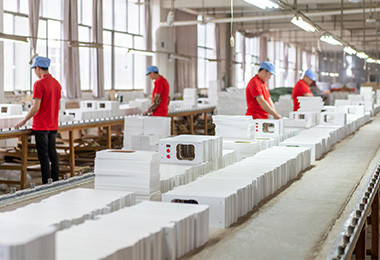
Packaging fails when it is developed in parallel with the toy instead of with it. Our workflow integrates the two from day one, following the stage-gated sequence described on our wooden toy design and development process page.
- Brand brief and dieline. We confirm channel, retailer requirements and budget, then issue dielines sized to the real product — not the other way around.
- Artwork design and prepress. Our designers lay out brand panels, compliance text and multilingual copy, with Pantone callouts, 3 mm bleed and barcode placement locked to the dieline.
- Digital proof and white sample. You approve content on a flat proof and fit on an unprinted fold-up, catching structural issues before any print run.
- Printed proof and golden sample. Colour is verified against agreed tolerances; the golden sample — box, insert and toy together — becomes the contractual reference.
- First-article and line trial. The first production boxes are checked for print fidelity, die-cut accuracy and filling speed on the actual packing line.
- Transit test and pre-shipment inspection. Carton drop testing plus a packed-unit AQL inspection close the loop before the container is loaded.
Across our twelve-stage production line, packaging touches the process at three points — after finishing, at assembly and at packing — which is why we insist on holding all three in-house, as our custom wooden toy solutions page describes.
How Packaging Affects MOQ and Cost
Packaging is usually the hidden MOQ driver in a private-label project. The tooling economics are unforgiving: a custom color box carries printing plate and die-cut costs that only amortise over volume, which is why full custom artwork typically starts around 1,000 pieces per SKU. Buyers who need smaller runs have three proven routes. Kraft or single-colour litho reduces plate count. A stock box with a premium printed belly band or label can start near 500 pieces and still read as fully branded on shelf. And displays, paradoxically, can reduce effective MOQ by merchandising several low-volume SKUs together.
On cost, four factors move the number most. Board grade and lamination choice swing material cost by double digits. The number of spot colours and special finishes — foil, spot UV, embossing — each add a pass and a cost. Inserts matter more than buyers expect: vacuum-formed PET and EVA are increasingly restricted by retailer sustainability policies, so moulded pulp and corrugate inserts, which we standardise, avoid both the restriction and the PR problem. Finally, freight reality must be designed in: sea containers expose packaging to 60–80% relative humidity for weeks, so stacking strength (corrugate ECT rating) and a moisture-appropriate finish on the wood itself are packaging decisions, not production decisions.
A useful planning ratio: for wooden toy programmes we typically see packaging land at 8–15% of ex-works cost. Below that range with full custom artwork, something is usually missing — compliance text, protective geometry or scan-grade printing.
Packaging Quality Control
Packaging QC runs on two levels, and both belong in your inspection scope. At artwork level, we verify barcode print quality against ISO 15416 grading, colour against the approved proof, rub resistance of the print, and the presence and wording of every mandatory safety statement. At physical level, cartons and packed units go through drop and compression testing, and packed units enter the standard AQL sampling at major 2.5 / minor 4.0 that governs every Forestoy shipment — with packaging defects counted, not excused.
Our three free inspections cover bulk sample, mid-production and pre-shipment, and the pre-shipment stage explicitly includes packed-carton checks: carton marks and shipping labels, master carton drop test results, and a scan test on retail barcodes. We also welcome your third-party inspector on site; a factory confident in its packing line does not fear an extra pair of eyes. This is the same dual internal-plus-accredited-laboratory testing discipline we apply to the toys themselves, certified through bodies such as SGS, TÜV, BV and Intertek.
For buyers assembling a full sourcing programme, our wooden toy wholesale buying guide covers how packaging choices interact with MOQ, pricing and lead times across a whole catalogue.
Forestoy's Private-Label and Packaging Support
Forestoy has manufactured wooden toys and children's furniture for more than 20 years and supplies over 100 brands across Europe, North America and Asia. Packaging capability sits inside that manufacturing system rather than beside it: our design team produces dielines, retail artwork and mail-order packaging for brand owners, supermarket chains and e-commerce sellers; our print, die-cut and folding work is controlled on the same floor as the toys; and our packing line runs the fit, labeling and transit tests described above on every order.
That integration shows up in three buyer-visible ways. Artwork and product are developed against one timeline, so packaging never delays a launch. Compliance text is reviewed against EN 71, ASTM F963, CPSIA and GPSR requirements before proof release, so customs and retailer onboarding do not stall. And sustainability is engineered, not decorated: FSC-certified fibre, water-based inks and paints, moulded-pulp inserts and solar-powered production — the systems documented on our sustainable wooden toy materials page — extend naturally into a packaging story your retail buyers can verify.
If your programme starts from the toy side rather than the packaging side, browse our wooden pretend play toys, wooden games or wooden music toys platforms — each ships with standard packaging engineering ready to be re-skinned for your brand.
Five Questions to Ask Before Approving Any Packaging Artwork
Bring this short list to your next packaging review. It takes ten minutes and prevents the five most expensive packaging mistakes we see importers make.
- Does every mandatory safety statement appear in the correct format for each destination market — EN 71-1 warnings, 16 CFR 1500.19 small-parts text, CPSIA tracking label?
- Is the barcode a GS1-licensed GTIN, supplied in vector, and scheduled for a scan-grade test on the first printed sheet?
- Does the construction meet the recyclability and empty-space direction of PPWR (EU) 2025/40, and can every logo on the pack — FSC, recyclability — be backed by a certificate?
- Has the packed carton passed a drop or ISTA-based transit test for your actual shipping route, including stacking for sea freight?
- Is the golden sample the complete pack — box, insert, toy, manual — signed by both sides as the contractual reference?
Related Reading
Packaging is only half of the private-label equation; see our Montessori wooden toy manufacturer guide for material standards, compliance and OEM/ODM development of the toys inside the box.
Request a Custom Packaging Proposal
The fastest way to evaluate Forestoy is to put our packaging engineering to work on one real SKU. Choose your starting point.
- Get dielines and a packaging proposal — send your product brief or reference packaging, and our design team will return structure options, board specifications and costed MOQ tiers.
- Request a golden sample pack — box, insert and product together, so your retail buyers judge the complete shelf presentation.
- Get the factory audit pack — certifications, QC workflow, AQL standards and transit-test records, ready for your compliance file.
Standards and Sources Referenced
- EN 71-1 safety warnings and marking requirements under EU Toy Safety Directive 2009/48/EC.
- 16 CFR 1500.19 small-parts warning requirements; CPSIA tracking label requirement for children's products.
- EU Packaging and Packaging Waste Regulation (EU) 2025/40, applying from August 2026; EU General Product Safety Regulation (EU) 2023/988.
- GS1 General Specifications for GTIN-13 / UPC-A symbols; ISO/IEC 15416 barcode print quality grading.
- ISTA 3A and ASTM D4169 packaged-product transit testing; 19 CFR 134 country-of-origin marking.
- FSC Chain-of-Custody Standard FSC-STD-40-004; global toy market estimates from Statista and Circana annual reviews.