How to Source Wooden Toys from China: A Step-by-Step B2B Guide
How to Source Wooden Toys from China: A Step-by-Step B2B Guide
To source wooden toys from China well, you do not need a sourcing agent or a trading office. You need a process. The buyers who get consistent quality, accurate landed cost and on-time deliveries are not the ones who found the cheapest wooden toys supplier China has to offer. They are the ones who ran the same nine steps in the same order, every time, and refused to skip the uncomfortable ones.
This guide is written for new importers, retailers, e-commerce brands and sourcing agents placing a first or second wooden toy order. It covers the full route from product definition to a cleared import. The full route covers the brief, supplier screening, factory capability, certifications, sampling, safety testing, MOQ and pricing, packaging, pre-shipment inspection and freight documentation. For a comparison of the cooperation models you can choose from, see the OEM vs. ODM guide for which route fits your portfolio.
Sourcing starts at the desk, not the factory: a written brief, a comparison sheet and physical samples to compare against it.

Why Source Wooden Toys from China?
China remains the world's deepest wooden toy supply base, and the reason is structural, not just labour cost. Wooden toy manufacturing depends on three things sitting close together. Consistent FSC-certified hardwood supply, precision CNC machining, and safe water-based finishing. In the established wooden toy clusters around Zhejiang, Guangdong and the Ningbo-Yunhe corridor, all three exist within a short drive of each other, along with the component suppliers that feed them. Non-toxic paint makers, hardware and fastener suppliers, print and packaging houses, and third-party testing laboratories.
That density produces two things a buyer can actually use. First, development speed. A factory that can cut a white mockup, revise it and re-cut it has a shorter learning loop than one sourcing its outsourced components across borders. Second, cost transparency. When materials, machining, finishing and packaging are all quoted locally, it is much easier to see where your money goes, and to negotiate the parts that genuinely have room. Buyers who buy wooden toys from China at scale typically run gross margins of 48–60% on own-brand product against 18–22% on unbranded white-label goods, which is why the extra effort of doing the process properly is worth it.
The trade-offs are real, and worth knowing up front. Distance compresses your ability to walk the line, so verification has to be built into the process instead of assumed. Compliance responsibility shifts to whoever places the goods on the market. You, not the factory, hold the obligation for the Technical File or Children's Product Certificate. And design protection requires paperwork. An NDA signed before drawings leave your desk, and registered design rights in your own market if the product is genuinely defensible. None of these are reasons to avoid wooden toys from China. They are reasons to run the steps below in order.
Every sourcing problem we see in a first order traces back to an incomplete brief. Before you contact a single factory, write one page that answers seven questions: what the product is, which age grade it targets, where it will be sold, what retail price it must hit, what annual volume you expect, which market's safety rules it must satisfy, and when it needs to be on shelf.
Age grading is the most consequential line on that page, because it determines the test protocol rather than merely a label. A wooden product for children under 36 months is evaluated for small parts, sharp edges, cord length and specific chemical migration limits. A product for ages 3+ carries different physical requirements and different warning obligations. Getting the age grade wrong at brief stage can invalidate an entire test report and force a packaging reprint.
Then work backwards from price. A useful starting rule for specialty retail is that your FOB target should be roughly one-quarter to one-fifth of the planned shelf price. The gap has to absorb ocean freight, duty, your importer margin, the retailer's margin and any promotional markdown. For mass-market and marketplace channels the multiple is tighter, closer to 2.5–3×, which usually means simplifying the product rather than squeezing the factory. Browse the wooden toys product catalog to sanity-check what a realistic build looks like across categories before finalising the brief.
The first thing to establish is who you are actually talking to. In every wooden toy cluster there are three distinct types of seller, and they are not interchangeable. A factory manufactures and quotes from its own line. A trading company resells other people's production, usually with a markup built in and thinner visibility on the shop floor. A hybrid does both, which is common and legitimate. Just know which you have. The trade-off breakdown is laid out in the China wooden toy supplier vs. factory article.
For screening, the useful test is not the answer to whether they are a factory. Everyone says yes. The real test is the specificity of the answers that follow. Ask for the address of the production site and the size of the workshop floor. Ask how many CNC machining centres they run and whether finishing is in-house. Ask who their hardwood supplier is and whether the chain of custody is FSC-certified. A genuine wooden toy factory China answers these in one reply. A reseller answers in generalities and offers to check with the production department.
Sources worth working, roughly in order of reliability. Trade show directories from Nuremberg, Hong Kong and Canton Fair. The verified-supplier sections of B2B platforms, treated as a lead source rather than a validation. Industry association member lists. And referrals from buyers in adjacent but non-competing categories. Once you have a shortlist of four to six, the manufacturer selection guide walks through the vetting questions that separate a long-term partner from a one-order supplier.
A shortlist beats a long list. Comparing eight suppliers on price alone produces decision paralysis. Comparing four on capability, compliance and communication produces an order. If you are building that shortlist from an existing pool, the scoring method in the wooden toy supplier comparison guide weights total landed cost rather than unit price, which usually reorders the ranking.
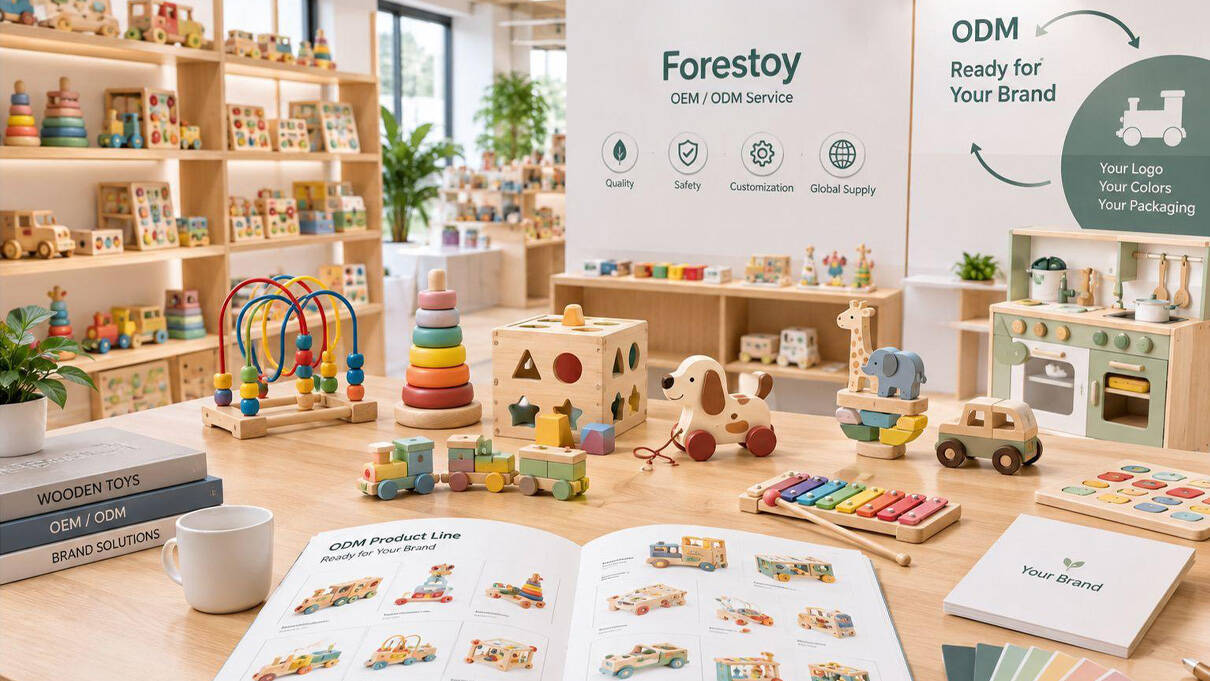
Capability and certification are two different checks, and buyers routinely confuse them. On a wooden toy sourcing China project that confusion is expensive. Certification tells you the factory can produce compliant product. Capability tells you it can produce your product, at your volume, on your date. You need both.
Capability: what to verify
- Machining. CNC routers or machining centres, plus a secondary operation set for drilling, rounding and edge-breaking. Hand-cut production cannot hold tolerance on a multi-part puzzle.
- Finishing. In-house water-based spray or dip lines, drying tunnels and dust control. Outsourced finishing is the most common source of colour inconsistency across batches.
- Capacity. Monthly unit capacity and how much of it is already committed. A factory running at 95% utilisation will quote you a date it cannot protect.
- Material control. Where the hardwood is stored, how moisture content is monitored, and whether incoming board is inspected. Beech and rubberwood at the wrong moisture content move after assembly.
- Documentation discipline. Can they show a sample compliance file and a previous inspection report without being asked twice?
Certifications: what to ask for by name
Ask for the actual certificates and test reports, not a list of standards. The ones that matter for wooden toys are FSC chain-of-custody for the timber. EN 71-1, EN 71-2 and EN 71-3 for the EU, which cover mechanical and physical properties, flammability, and migration of certain elements respectively. ASTM F963 for the United States, alongside CPSIA requirements and testing at a CPSC-accepted laboratory. And ISO 8124 for international programmes. If your channel includes the UK, UKCA marking applies on top of the underlying EN standards.
The practical question is not whether the factory has certificates. Most do. The question is whether the certificate covers the material and process used for your product. An EN 71-3 report on a different paint system does not cover yours. The safety and quality control page walks through how certification is maintained against a live bill of materials rather than a static file. The manufacturing capacity page documents the machine and finishing capability behind it. The full audit questionnaire is item-by-item in the factory selection checklist.
Samples are the cheapest risk reduction available in the whole process, and the most commonly under-used. There are two distinct types, and buyers who conflate them waste both time and money.
A white mockup is an unfinished, uncoloured article that proves geometry, proportion and construction. For a custom design it typically takes 5–10 business days once drawings are frozen, and costs roughly USD 50–300 per design. A counter-sample is a finished, coloured sample of an existing platform with your customisation applied. The right first sample when you are working with a catalog design, usually returned in 7–15 days.
Only the second stage matters for production approval. A finished prototype in your production colours, with your finish and hardware. When you approve it, do it formally. Sign a sample approval sheet, photograph the sample from every angle, record the colour references, and seal a golden sample that both you and the factory keep. That sealed sample is the reference that a pre-shipment inspector measures against, and it is the document that ends arguments about acceptable variation three months later.
Two habits make sampling far more productive. Send the factory a physical reference, a previous product, a competitor's item, or a colour swatch, rather than describing it in words. And give consolidated feedback in a single round rather than a stream of small revisions. Each revision round costs a full sample cycle. The way Forestoy structures this workflow, including who approves what and when, is documented on the design and development page.
Testing is where a sourcing project becomes an import project, and where the cost of an error is highest. The right sequence is to test the material and finish system first, then the finished article. A failure at the finished-article stage usually means reworking paint or hardware, and that resets your clock.
For the EU, the working set is EN 71-1 for mechanical and physical properties, EN 71-2 for flammability and EN 71-3 for migration of certain elements, with additional parts applying to specific chemistries. Compliance is demonstrated through a Technical File and CE marking. For the United States, ASTM F963 governs toy safety, CPSIA sets the limits for lead content and restricted phthalates, and children's products require testing at an accepted third-party laboratory before a Children's Product Certificate can be issued. In practice, buyers in both markets also want the testing done by a laboratory the retailer's own compliance team recognises. SGS, Bureau Veritas, Intertek and TÜV are the names that move through retail onboarding without friction.
Test on your actual production materials. A report issued against a generic water-based paint tells a retailer nothing. The report must reference the specific supplier, product code and colour batch used on your line. Keep the report, the bill of materials and the sample in one file. That file is your compliance position, and it needs to survive a customs query or a retailer audit years later.
Quality systems sit alongside testing rather than replacing it. A factory running in-line inspection during machining and finishing, plus a final AQL inspection before packing, catches problems while they are still cheap to fix. The quality control process sets out where inspection points sit on the line and what each one is checking for.
Three numbers decide whether a wooden toy order is viable, and they interact in ways that are easy to miss.
MOQ. First-batch minimum order quantities for wooden toys typically land in the 500–2,000 unit range per SKU for a custom design, because the factory has to amortise tooling, fixture setup and engineering hours across the run. For catalog platforms, or for orders spread across an existing range, the floor is often lower. The mistake is treating MOQ as a single number to negotiate down. It is a function of setup cost, so the way to lower it is to share it. Consolidate SKUs onto one material and finish, or accept a longer production window so the line can be scheduled around other work. The MOQ and capability page explains how that tramline is planned in practice.
Pricing. A wooden toy quotation is built from material grade, machining time, finishing, hardware, packaging and margin. When comparing quotes, insist on a cost breakdown rather than a unit price, and make sure the same things are inside every quote. The most common omission is packaging. A price quoted for bulk cartons and a price quoted for retail-ready colour boxes with a barcode and a hang tag are not comparable, and the gap between them is often larger than the difference you are negotiating over. The wholesale buying guide includes the cost-stack structure that makes quotations comparable line by line.
Lead time. For a custom wooden toy, mass production runs 45–60 days after sample approval, with the full development cycle from design freeze to goods on water typically 80–120 days. Two calendar factors routinely break otherwise sound schedules. The Chinese New Year shutdown, when factories close for one to three weeks and both production slots and container space tighten sharply beforehand. And the pre-Q4 peak, when freight capacity is committed early. If your shelf date is fixed, work backwards from the sailing date, not from the production order.
Packaging is the step buyers schedule last and regret most, because it sits on the critical path with the longest single-lead-time item on it. Printed board. A print-ready dieline typically takes 7–15 days to produce and approve with artwork rounds, and the packaging print run adds its own lead time before cartons can be filled.
Build the artwork pack in one pass. You will need the dieline drawing, the colour separation file, and the regulatory content that must appear on the pack. The age grade and any warning statements for your market, the importer or distributor address, the country of origin, and a batch or tracking code. For marketplace and Amazon channels, add barcode and carton label requirements. And for US children's products, the CPSIA tracking label must be permanent and legible on the product or its packaging.
Also specify the outer packaging, not just the retail pack. Carton dimensions and stacking strength determine how your goods travel. Retail-ready colour boxes packed loose in a container arrive damaged. Ask for the carton to be drop-tested or transit-tested against the ISTA protocol your retailer recognises, and confirm pallet configuration at the same time. The packaging and labeling page covers retail packs, dielines and export cartoning as one workflow.
Never ship against photographs supplied by the seller. A pre-shipment inspection is a small line item against the cost of a container of product that fails on arrival, and it is one of the clearest markers of a professional buyer.
Book it when production is complete and packed but before the container is loaded. Typically three to seven days' notice is needed for a third-party inspector. The standard sampling plan is AQL 1.5 for major defects and 2.5 for minor defects, or AQL 2.5 / 4.0 for lower-risk categories. The inspector measures against your sealed golden sample and checks at minimum: dimensions and construction, edge and surface finish, colour match against the approved reference, hardware and fastener security, paint adhesion, labelling and barcode scannability, and carton count, weight and marking.
Two refinements are worth insisting on. First, ask for the inspection to include a functional check on a working article, not just a visual one. Open and close the mechanism, assemble the puzzle, pull the toy along the floor. Second, ask for container loading supervision. Pallets or cartons loaded badly can damage a shipment that passed inspection perfectly, and wooden packaging adds a detail that catches importers out. Crates and pallets made from solid wood must be heat-treated or fumigated and marked under ISPM 15 before they can enter most markets, with the IPPC stamp visible on the pallet itself.
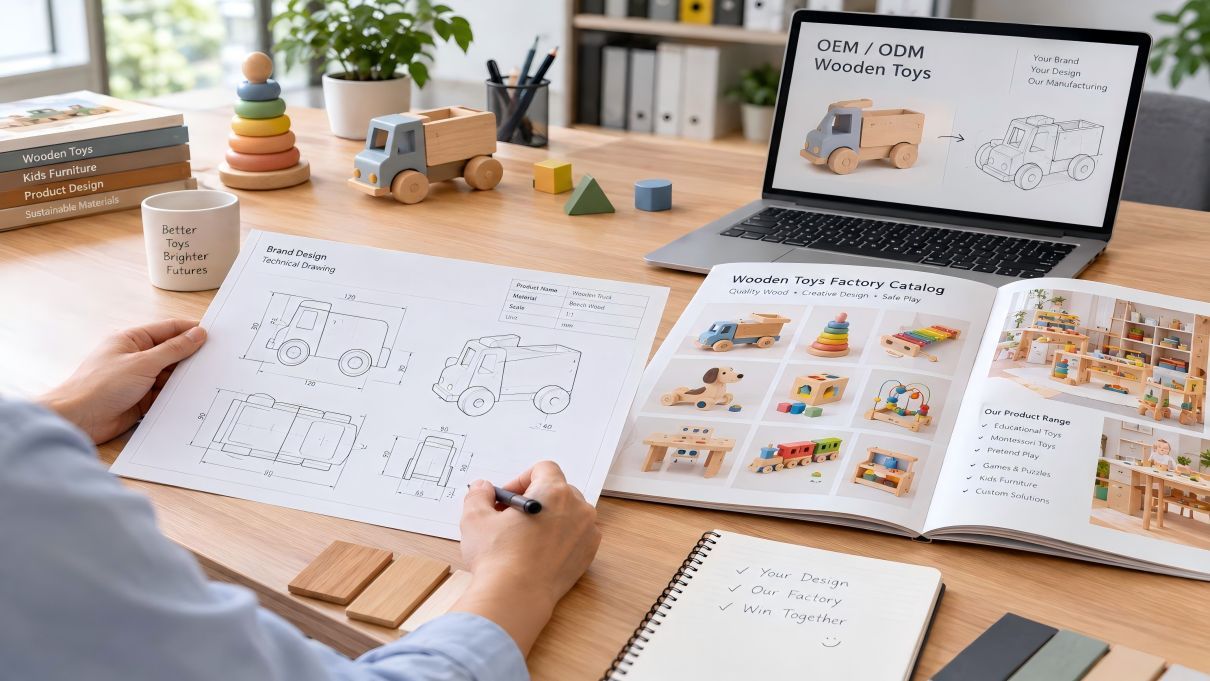
The first time you import wooden toys from China, the documentation feels heavier than the manufacturing. It is not complicated once it is ordered correctly, and the sequence below keeps it manageable.
Set your incoterm deliberately rather than by default. EXW leaves you responsible from the factory door, including inland trucking in China. Rarely the right choice for a first order. FOB, where the seller delivers to the named Chinese port and you control the forwarder and the ocean leg, is the standard for buyers who want visibility on freight and transit. CIF adds the freight and insurance to that. DDP shifts the whole import obligation to the seller. Convenient, but it hides the duty you are paying and leaves you with no relationship to your own customs broker, which becomes a problem the moment you need to claim something or file a correction.
On the document side, expect at minimum a commercial invoice, a packing list, a bill of lading, a certificate of origin if a preferential rate applies, and your compliance file. Test reports plus the Children's Product Certificate for the US or the Technical File for the EU. Most wooden toys are classified under HS heading 9503, but confirm the exact code with your customs broker before the first shipment. Duty rates, and the additional tariffs that apply to certain Chinese-origin goods in some markets, change, and getting the classification wrong is far more expensive to correct after entry than before.
On transit, plan in weeks rather than days and treat the number as lane-specific. A US West Coast sailing, a US East Coast sailing and a Northern Europe sailing are three different transit times, and peak-season congestion or a blanked sailing can add days on top. Ask your forwarder for a door-to-door transit estimate against an actual confirmed sailing, not an indicative average, and build a two-week buffer into any fixed shelf date. The order and delivery FAQ covers shipping options, export markets and production lead times, and the export documentation guide goes deeper on paperwork and market requirements.
Common Sourcing Mistakes to Avoid
Almost every failed first order we see is one of these nine errors, and most of them are avoidable with paperwork rather than money.
- Talking price before defining the product. A unit price is meaningless without an age grade, a packaging format and a volume. You will be re-quoting anyway, so define first.
- Not knowing who you are buying from. A trading company is not automatically worse, but an unacknowledged one is. Know which layer you are paying for.
- Comparing quotes that contain different things. Testing, retail packaging, pallets, inland freight and inspection are the usual missing items. Normalise every quote to the same scope.
- Skipping the sealed golden sample. Without a signed reference, "within tolerance" becomes a matter of opinion, and the opinion that counts is not yours.
- Testing after production instead of before. Test the material and finish system first. A failed finish after the run is finished is a re-run, not a correction.
- Underestimating landed cost. Freight, duty, ISPM 15 pallets, testing, inspection, brokerage and last-mile delivery can add a third or more on top of FOB. Model the landed cost before you set the retail price.
- Ignoring the production calendar. Planning an order to finish during Chinese New Year, or to sail in the pre-Q4 crunch, is the single most reliable way to miss a shelf date. Book early and confirm the factory's holiday schedule.
- Leaving packaging to the end. Printed board has the longest lead time in the project and the least slack. Start the dieline while the sample is still in revision.
- Paying in full before inspection. Standard terms are a deposit at order with the balance against inspection or against the bill of lading copy. If a supplier demands full prepayment from a new buyer, that is a signal about their cash position, not your creditworthiness.
Forestoy's China Wooden Toy Sourcing Support
Forestoy has manufactured wooden toys in China since 2003 and exports to more than 100 international brands from a 1,500+ SKU catalog, with in-house design, CNC machining and water-based finishing across roughly 200,000 units of monthly capacity. Because wooden toys sourcing China projects fail on process rather than capability, our support is built around the steps above. A written feasibility response to your brief, sampling with a sealed golden sample, compliance coordination with recognised third-party laboratories, packaging and dieline development, AQL inspection with a photo report, and freight documentation on FOB Ningbo, EXW or DDP terms.
What you get in the first two weeks:
- Brief review. Send your one-page brief or a catalog shortlist. Our product team replies within two business days with feasibility, indicative cost ranges, MOQ and a realistic timeline, including an honest answer if your target price does not fit the specification.
- Specification and cost stack. We return a line-by-line quotation covering material, machining, finishing, hardware, packaging and tooling, so the comparison against other suppliers is like for like.
- Sampling. White mockup in 5–10 days for custom work, or a customised counter-sample in 7–15 days for catalog platforms, with written approval documentation.
- Compliance planning. EN 71, ASTM F963, CPSIA and ISO 8124 testing scoped against your actual bill of materials and coordinated with the laboratory your retailer accepts.
- Production and shipment. 45–60 days with in-line and final AQL 1.5 / 2.5 inspection, pre-shipment report with photographs, and full export documentation including ISPM 15 compliant pallets.
If you are sourcing a first order or replacing a supplier that has gone wrong, send us the brief and the problem. As a wooden toys exporter China buyers return to for repeat programmes rather than one-off shipments, we are usually able to say within two business days whether your product, price and date are achievable. We will also tell you what would have to change if they are not.
Sources
CEN/TC 52. EN 71-1 / EN 71-2 / EN 71-3, Safety of Toys. Mechanical and physical properties, flammability, and migration of certain elements.
ASTM International. ASTM F963, Standard Consumer Safety Specification for Toy Safety.
U.S. Consumer Product Safety Commission. Consumer Product Safety Improvement Act (CPSIA). Lead and phthalate limits, third-party testing and Children's Product Certificate requirements.
IPPC. ISPM 15, Regulation of Wood Packaging Material in International Trade. Heat treatment and marking requirements.
International Chamber of Commerce. Incoterms 2020. Exporter and importer responsibilities under EXW, FOB, CIF and DDP.
Klugonyx (2026). The Emerging Brand's Playbook for the U.S. Toy and Game Industry. Own-brand versus white-label margin performance.
Forestoy internal sourcing and production records, 2024–2026. Sampling, MOQ, lead-time and inspection ranges.